

SHARE:


Posted by CVR Editorial Team on May 22, 2026
Week 21/2026 – Central Vietnam Real Estate News Summary
Week 21/2026 – Central Vietnam Real Estate News Summary
In this weekly or sometimes bi-weekly news flash – CVR: Central Vietnam Realty will provide a choice of articles from mainly Vietnamese media sources related to the real estate market in Vietnam.
We will be focusing on issues related to Da Nang and Hoi An, while also looking at national news and their possible impact on Central Vietnam’s property market.
You will find a summary, a link to the source as well as CVR’s take on the article.
We believe that local knowledge is the key to making the best possible decision and that’s what we offer to all our clients.
“CVR: Western Management – Local Knowledge”
Key Takeaways
•Da Nang International Airport has officially started the expansion of Terminal T2, with nearly VND 1,500 billion invested to increase passenger capacity, improve airport operations, and strengthen Da Nang’s role as a major international gateway in Central Vietnam.
•Vietnam’s Ministry of Construction is proposing reforms to shorten construction permit approval times to 7–10 days through digitalized procedures, simplified administration, and reduced paperwork, creating a more efficient and investor-friendly environment.
•Tô Lâm emphasized that affordable housing should be treated as a fundamental social right, while rental housing must become a long-term strategic pillar of Vietnam’s housing policy through 2030.
•Da Nang continues strengthening its appeal as a tourism and lifestyle destination through events such as the Da Nang Food Tour 2026, alongside ongoing smart city, infrastructure, and coastal development projects.
•Da Nang climbed 212 places in the 2026 Global Startup Ecosystem Index, reflecting the city’s rapid progress in innovation, technology, and startup development as it aims to become a leading regional innovation hub in Southeast Asia.
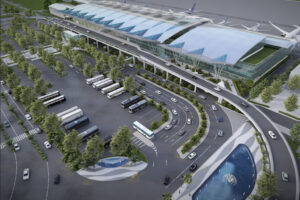
1. AHT Breaks Ground on Da Nang International Passenger Terminal Expansion Project.
-
The expansion of Terminal T2 at Da Nang International Airport has officially begun, marking a significant step in upgrading the city’s aviation infrastructure and supporting long-term economic growth. Developed by Da Nang International Terminal Investment and Operation Joint Stock Company with an investment of nearly VND 1,500 billion, the project responds to rapidly increasing international passenger demand. Originally designed to handle 4 million passengers annually, Terminal T2 has consistently exceeded capacity, serving more than 7.1 million travelers in 2019 while maintaining strong traffic levels through 2024 and 2025.
-
The project will add approximately 3,600 square meters, increasing the terminal’s total area to over 21,000 square meters. Major upgrades include expanding check-in counters from 54 to 85, increasing boarding bridge gates from 4 to 7, and installing an advanced baggage handling system to improve efficiency and reduce waiting times. The design will maintain the airport’s existing architectural identity while creating more passenger-friendly and natural spaces. Once completed, the expanded terminal is expected to accommodate around 6 million international passengers annually, strengthening tourism, connectivity, and Da Nang’s role as a major aviation hub in Central Vietnam.
Source: danangfantasticity.com
2. Vietnam Proposes Cutting Construction Permit Approval Time to 7–10 Days.
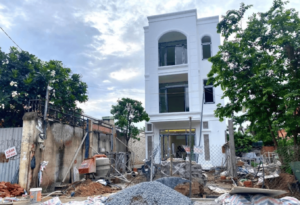
The Ministry of Construction is proposing major reforms to simplify Vietnam’s construction permit process, aiming to significantly reduce approval times and administrative costs for both individuals and businesses. Under the proposal, construction permits could be issued within 7–10 days, while permits for individual houses may take as little as 7 days. The reforms are designed to improve efficiency, transparency, and convenience while supporting the government’s broader digital transformation strategy.
A key focus of the proposal is the digitalization of administrative procedures, allowing applicants to submit permit applications entirely online and reducing reliance on physical paperwork. Authorities would also directly access existing national database information, such as land use certificates, eliminating repeated document submissions. In addition, the Ministry plans to streamline design appraisal procedures, shorten approval timelines for professional certificates and foreign contractor permits, and expand categories of projects exempt from permit requirements. The proposed reforms are linked to the amended Construction Law and are expected to take effect from July 1, 2026, potentially creating a more efficient and investor-friendly construction environment across Vietnam.
Source: cafef.vn
3. General Secretary and President: From Now to 2030, Rental Housing Must Be Established as a Strategic Pillar.
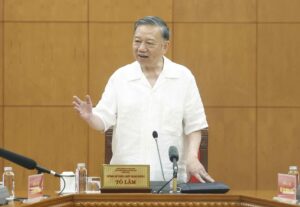
Tô Lâm emphasized that access to safe, stable, and affordable housing should be considered a fundamental right and an important measure of social progress in Vietnam’s new development era. During a meeting on the implementation of social housing policies, he stressed that housing development must be integrated into broader urban planning, labor distribution, public transportation, healthcare, education, and social welfare strategies rather than being viewed solely as a construction issue. He also stated that housing is meant for living, not speculation or wealth accumulation, while acknowledging that current housing policies have yet to meet the growing demands of society.
A major focus of the discussion was the need to develop a long-term rental housing market as a strategic pillar, particularly in large cities, industrial zones, and areas where housing prices greatly exceed average incomes. The government plans to improve legal frameworks, simplify administrative procedures, expand land availability for social housing, and introduce long-term financial mechanisms to support affordable housing projects. Authorities also aim to strengthen oversight to prevent speculation and ensure housing policies benefit the correct groups. In addition, private companies and non-profit organizations are encouraged to participate in developing subsidized rental housing for low-income families, helping create a more sustainable and accessible housing market in Vietnam.
Source: tuoitre.vn
4. Opening of Da Nang Food Tour 2026: A Spectacular Culinary Feast by the Beach.

Da Nang is emerging as one of Vietnam’s most dynamic and attractive cities thanks to its strategic location, modern infrastructure, and growing tourism industry. The city has successfully attracted international investors and visitors through major developments in hospitality, technology, and real estate. Combined with its clean environment, high quality of life, and welcoming local culture, Da Nang continues to appeal to both residents and foreign professionals seeking long-term living and investment opportunities.
The expansion of coastal resorts, smart city projects, and transportation infrastructure has created strong momentum for economic growth and new business opportunities. However, sustainable urban planning, environmental protection, and preserving cultural identity remain important challenges as the city continues to develop rapidly. Looking ahead, Da Nang is expected to strengthen its position further by improving international connectivity, supporting innovation and startup ecosystems, and investing in green infrastructure. Closer cooperation between government authorities, businesses, and local communities will also play a key role in helping the city achieve sustainable growth and become a leading economic and tourism hub in Southeast Asia.
Source: baomoi.com
5. Da Nang climbs 212 places in global startup ecosystem rankings.
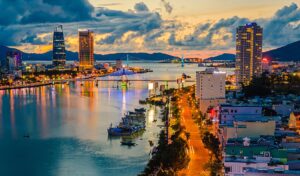
Da Nang has made a remarkable leap in the 2026 Global Startup Ecosystem Index, climbing 212 places from 766th to 554th globally. Announced during StartupBlink’s global online seminar, the achievement highlights the city’s growing reputation as an emerging innovation and technology hub in Southeast Asia. The strong improvement reflects not only the increasing number of startups but also the rising quality, connectivity, and competitiveness of Da Nang’s innovation ecosystem on the global stage.
According to local officials, the progress is the result of long-term collaboration among government agencies, universities, research institutes, technology companies, investors, mentors, and international partners. Da Nang has also prioritized investment in digital transformation, innovation infrastructure, and high-tech industries including artificial intelligence, semiconductors, blockchain, and biotechnology. Through international cooperation programs, startup events, and innovation initiatives, the city continues to strengthen its ecosystem. Being selected by StartupBlink as a representative ecosystem at the global launch workshop further reinforces Da Nang’s ambition to become a leading regional innovation center in the future.
Source: en.baodanang.vn
-
-
As always, CVR is at your service and happy to provide help anyways we can!
Contact Us today to find the real estate investment in Da Nang that is right for You.
-