2. New Real Estate and Construction Policies Effective from March 2026 in Vietnam.
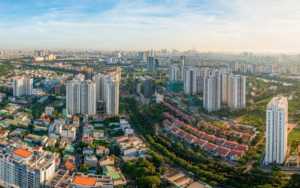
Starting from March 2026, several new policies related to real estate and construction will take effect in Vietnam. One key regulation introduces a national database system for housing and the real estate market, requiring detailed information about projects, investors, capital, construction progress, and property prices to be recorded and managed to improve market transparency. In addition, new planning requirements emphasize sustainable development, environmental protection, balanced regional growth, and efficient use of resources. Planning activities must also consider social factors and the protection of vulnerable groups. Another change is the abolition of an old circular related to land-use fee support for people with meritorious services, aiming to update and streamline the legal framework. Overall, these policies aim to enhance transparency, efficiency, and sustainable development in Vietnam’s real estate sector.
Source: cafeland.vn
3. How Should Individuals With Multiple Rental Properties Declare And Pay Taxes?
-
-
-
Real estate owners in Vietnam are required to pay tax on rental income only when their total annual revenue exceeds 500 million VND. This threshold acts as a tax-free allowance applied to the owner’s entire portfolio of rental contracts within a year. If total rental income remains below this level, the owner is not subject to value-added tax (VAT) or personal income tax (PIT).
-
Once annual rental income surpasses 500 million VND, the portion exceeding the threshold is generally taxed at a combined rate of 10%, including 5% VAT and 5% PIT. Property owners must declare and pay these taxes at the local tax office corresponding to the location of each property. To simplify administration, landlords can also use the eTax Mobile application to manage multiple properties, track rental income, and monitor whether their total revenue has exceeded the tax-exemption limit.
Source: cafef.vn
4. Da Nang to Relocate Tho Quang Fishing Port and Transform the Area into a Modern Tourist Port.
-
-

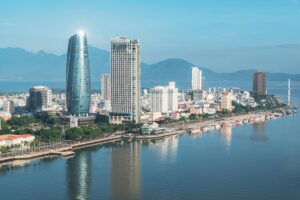
Da Nang plans to relocate Tho Quang Fishing Port, the largest fisheries hub in Central Vietnam, as part of its long-term urban strategy. While the port has played a vital role in regional seafood logistics, its location within a densely populated area has caused environmental pollution, traffic congestion, and conflicts with nearby residential and tourism zones. Authorities aim to move both the port and the adjacent 50-hectare fisheries industrial area to a more suitable location, ensuring continued operations while improving urban conditions.
Following the relocation, the current site will be redeveloped into a modern coastal urban and tourism complex, including a new tourist port. This transformation supports Da Nang’s shift toward a service-oriented and high-value economy, enhancing its waterfront landscape and unlocking prime land for development. The project also reflects a broader transition toward sustainable urban planning while maintaining support for local fishing communities and long-term economic growth.
Source: tuoitre.vn
5. Proposed Special Mechanisms for Sea-Reclamation Urban Project in Da Nang.

Bộ Tư pháp has released an appraisal report on a draft government decree introducing special mechanisms for a proposed sea-reclamation urban project in Da Nang. A key highlight is that strategic investors are not required to allocate on-site land for social housing. Instead, they must pay an equivalent amount based on 10% of residential land value and infrastructure costs. The draft also allows investors to transfer parts of the project after completing infrastructure and lease land with one-time payment for the entire project duration.
Additionally, investors can sublease land-use rights and transfer certain property types to foreign buyers within regulated limits. Foreign ownership is capped at 50% of apartments in a building or a maximum of 250 landed units per area. The draft also outlines flexible policies on mineral extraction for construction and grants local authorities greater autonomy in allocating sea areas, aiming to accelerate project implementation while ensuring regulatory oversight.
Source: vneconomy.vn
6. Da Nang Invests Nearly VND 1,400 Billion to Eliminate Traffic Bottlenecks at Hoa Xuan Bridge Area.
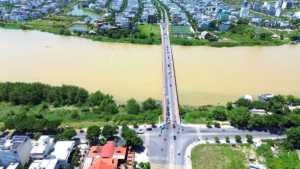
Da Nang has approved a nearly VND 1,400 billion infrastructure project to tackle chronic congestion at the Hoa Xuan Bridge interchange, a key gateway to the city’s southern districts. The plan targets major connecting routes such as Le Thanh Nghi, Cach Mang Thang Tam, and Thang Long, where heavy traffic and overlapping flows have caused frequent bottlenecks during peak hours.
The project will introduce a grade-separated interchange system with overpasses and underpasses to streamline traffic movement and reduce conflicts. It also includes road expansions, upgrades to nearby bridges, and the construction of a new parallel bridge to improve cross-river connectivity. Additional works such as riverfront roads, drainage systems, and embankments will enhance urban integration. Scheduled for 2026–2029 and funded by the city budget, the project is expected to significantly improve traffic flow, safety, and overall connectivity in Da Nang.
Source: vneconomy.vn
-
-
As always, CVR is at your service and happy to provide help anyways we can!
Contact Us today to find the real estate investment in Da Nang that is right for You.