

CHIA SẺ:


Đăng bởi Đội Ngũ Biên Tập CVR vào May 14, 2026
Week 20/2026 – Central Vietnam Real Estate News Summary
Week 20/2026 – Central Vietnam Real Estate News Summary
In this weekly or sometimes bi-weekly news flash – CVR: Central Vietnam Realty will provide a choice of articles from mainly Vietnamese media sources related to the real estate market in Vietnam.
We will be focusing on issues related to Da Nang and Hoi An, while also looking at national news and their possible impact on Central Vietnam’s property market.
You will find a summary, a link to the source as well as CVR’s take on the article.
We believe that local knowledge is the key to making the best possible decision and that’s what we offer to all our clients.
“CVR: Western Management – Local Knowledge”
Key Takeaways
•Da Nang is studying Vietnam’s first airport-underpass tunnel to improve urban connectivity and reduce congestion.
•Vietnam’s new Construction Law simplifies permit procedures but increases owner responsibility for legal compliance.
•Vietnam’s inclusion among APAC growth leaders strengthens long-term real estate and infrastructure investment potential.
•The Ministry of Finance continues researching a future property tax framework targeting market stability and speculation control.
•Da Nang is accelerating key infrastructure and real estate projects by removing administrative and legal bottlenecks.
1. Da Nang Studies Construction of a VND 10,000 Billion Underground Tunnel Beneath the International Airport.
-
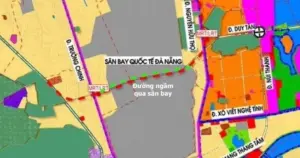
Da Nang is studying a landmark infrastructure project to build a tunnel beneath Da Nang International Airport, with an estimated investment of around VND 10,000 billion. If approved, it would become Vietnam’s first tunnel constructed under an active airport runway. The project aims to improve east–west traffic connectivity, as the airport currently creates a major barrier within the city, increasing congestion and limiting urban mobility. Preliminary plans include a 2.9-kilometer tunnel system, with nearly 900 meters running directly beneath the runway.
-
Due to the complexity of construction beneath an operational airport, the project would require advanced engineering, strict vibration control, and rigorous aviation safety standards. Authorities are considering several technical options, including integrating future MRT or subway infrastructure into the tunnel system. Because the airport also has strategic defense functions, the project will require approval from central government, aviation, and military authorities. The proposal is currently in the pre-feasibility stage, with studies expected to continue through 2026.
Source: vietnam.vn
2. New Construction Law Expands Permit Exemptions, But Does Not Mean “Build Freely”.
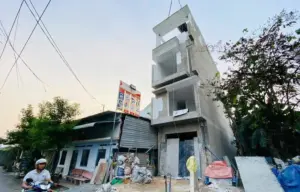
The amended Construction Law 2025, effective from July 1, 2026, marks a major shift in Vietnam’s construction management by expanding cases exempt from construction permits. Small private homes under seven floors and 500 square meters, including many Level-4 houses, will no longer require permits. The reform aims to simplify administrative procedures and reduce reliance on the traditional permit-based system, especially for homeowners in urban areas. Interior renovations that do not affect structural integrity or external appearance, along with certain pre-approved infrastructure projects, are also exempt.
Despite the simplification, permit exemption does not mean unrestricted construction. Property owners must still comply with zoning, planning, and technical regulations while notifying local authorities before construction. Violations may still result in fines, forced corrections, or demolition orders. Overall, the new law reduces bureaucratic barriers but places greater responsibility on owners to ensure legal compliance throughout the construction process.
Source: tuoitre.vn
3. Vietnam Enters APAC Growth Leaders, Creating New Opportunities for Real Estate Markets.

Vietnam has been ranked among the Top 20 growth hubs in the Asia-Pacific region by Savills World Research, highlighting the country’s rising economic strength and long-term real estate potential. The report evaluated 245 cities based on GDP growth, wealth accumulation, demographics, and migration trends through 2035. Ho Chi Minh City ranked as the second-fastest growing city in APAC, while Hanoi placed fifth, supported by infrastructure investment, expanding middle-class demand, and strong foreign direct investment inflows.
This recognition is expected to create new momentum for Vietnam’s real estate market, particularly across office, residential, and mixed-use sectors. As international businesses continue expanding operations in Vietnam, demand for high-quality real estate and professional property management standards is increasing rapidly. Experts believe integrated facility management, ESG compliance, and operational efficiency will become increasingly important as Vietnam strengthens its position as one of Asia-Pacific’s most dynamic growth markets.
Source: laodong.vn
4. The Ministry of Finance continues to study the implementation of a property tax.
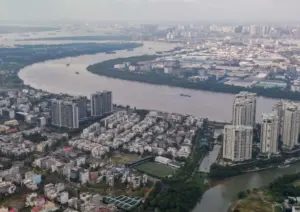
The Vietnamese Ministry of Finance is currently reviewing the Non-Agricultural Land Use Tax Law while researching the development of a comprehensive Property Tax Law. This move follows recommendations to replace existing land taxes with a more effective system to regulate the real estate market and high-value assets. Between 2012 and 2021, non-agricultural land taxes provided a stable annual revenue of approximately 1.7 trillion VND. While the government aims to curb speculation and stabilize prices—potentially targeting second homes or vacant properties—the Ministry acknowledges that this is a complex policy. Due to its significant impact on citizens, businesses, and the economy, the Ministry is further studying international experiences and domestic implementation challenges to ensure the new tax framework aligns with Vietnam’s socio-economic goals for 2021–2030.
Source: vnexpress.net
5. Da Nang Moves to Remove “Bottlenecks” and Accelerate Key Development Projects.

Da Nang authorities are accelerating key economic and infrastructure projects by removing legal, administrative, and land-clearance bottlenecks. The city is prioritizing strategic developments such as the urban expressway connecting Da Nang to Chu Lai, Metro Line 2, social housing projects, and faster construction approval procedures. City leaders emphasized stronger accountability, requiring each project to have clear timelines, responsible personnel, and measurable outcomes. The government is also focusing on resolving long-standing legal issues tied to delayed real estate and land projects to unlock investment capital and support economic growth. In addition, Da Nang aims to improve investor confidence, strengthen regional connectivity, and achieve sustainable urban development through more efficient governance and proactive support for businesses and residents.
Source: baodanang.vn
-
-
As always, CVR is at your service and happy to provide help anyways we can!
Contact Us today to find the real estate investment in Da Nang that is right for You.
-