


CHIA SẺ:


Đăng bởi Đội Ngũ Biên Tập CVR vào March 13, 2026
Week 11/2026 – Central Vietnam Real Estate News Summary
Week 11/2026 – Central Vietnam Real Estate News Summary
In this weekly or sometimes bi-weekly news flash – CVR: Central Vietnam Realty will provide a choice of articles from mainly Vietnamese media sources related to the real estate market in Vietnam.
We will be focusing on issues related to Da Nang and Hoi An, while also looking at national news and their possible impact on Central Vietnam’s property market.
You will find a summary, a link to the source as well as CVR’s take on the article.
We believe that local knowledge is the key to making the best possible decision and that’s what we offer to all our clients.
“CVR: Western Management – Local Knowledge”
1. How Should Individuals With Multiple Rental Properties Declare And Pay Taxes?
-
Real estate owners in Vietnam are required to pay tax on rental income only when their total annual revenue exceeds 500 million VND. This threshold acts as a tax-free allowance applied to the owner’s entire portfolio of rental contracts within a year. If total rental income remains below this level, the owner is not subject to value-added tax (VAT) or personal income tax (PIT).
-
Once annual rental income surpasses 500 million VND, the portion exceeding the threshold is generally taxed at a combined rate of 10%, including 5% VAT and 5% PIT. Property owners must declare and pay these taxes at the local tax office corresponding to the location of each property. To simplify administration, landlords can also use the eTax Mobile application to manage multiple properties, track rental income, and monitor whether their total revenue has exceeded the tax-exemption limit.
Source: cafef.vn
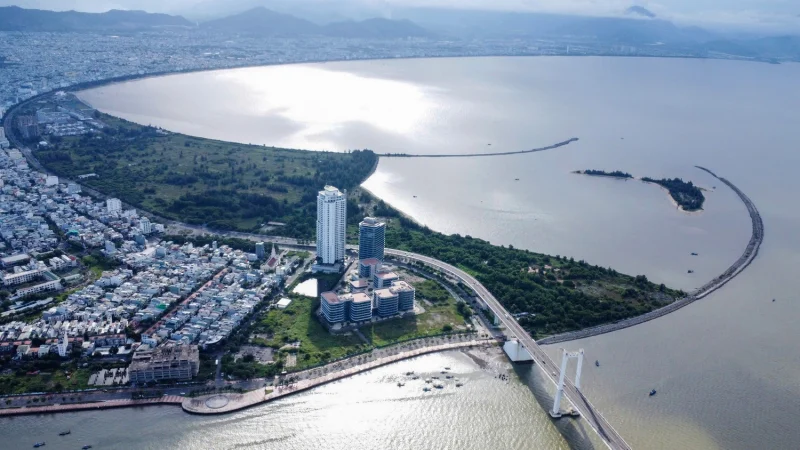
2. Adjustment of Han River Planning to Resolve Stalled Projects in Da Nang, Including the 181-ha Da Phuoc Urban Area.

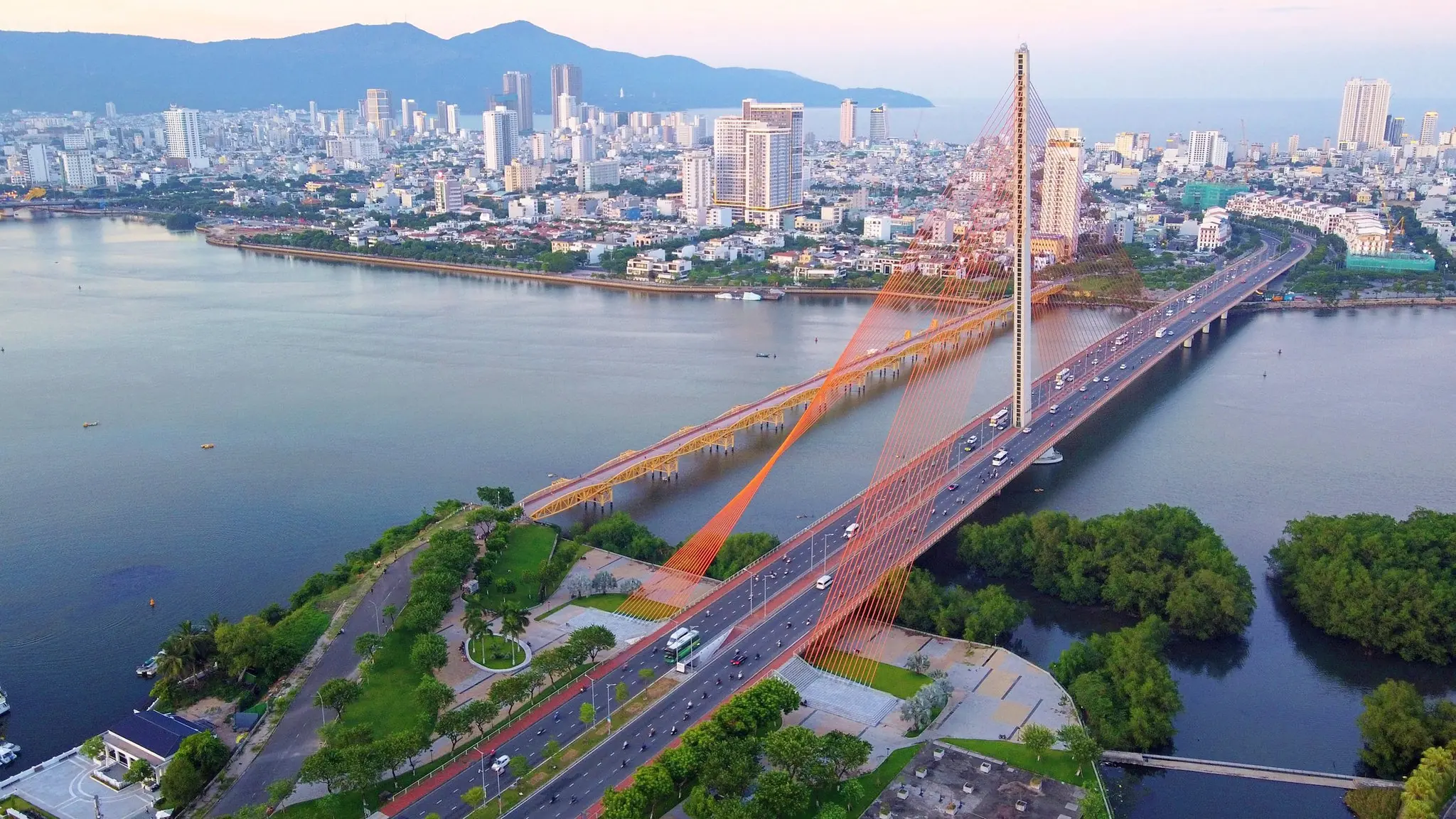
The Da Nang People’s Committee has approved a task to comprehensively adjust the zoning plan for the Han River and eastern coastal areas at a 1/2,000 scale. The plan covers about 6,675 hectares across several districts and wards, aiming to update population targets and review land use to support urban development. The adjustment is intended to remove legal and planning obstacles affecting several projects, particularly the 181-hectare Da Phuoc International Urban Area (also known as Sunrise Bay), which has been stalled for years and remains largely unused. Authorities plan to review and possibly increase population indicators for this project in accordance with government resolutions designed to resolve issues with problematic land and real estate projects. In addition, the new planning framework will help create a legal basis for social housing development, reorganize land resources, and allocate land for public infrastructure such as parks, schools, and community facilities. The city also plans to review unused or expired leased land and convert it into public spaces and social infrastructure. Overall, the planning adjustment is expected to unlock land resources, address long-standing project difficulties, and support sustainable urban development in Da Nang.
Source: tuoitre.vn
3. Da Nang Leaders Inspect Preparations for the Groundbreaking of a VND 4,152 Billion Industrial Park Project.
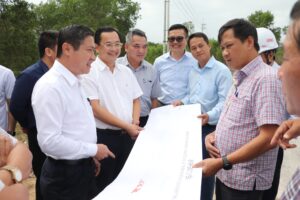
Leaders of Da Nang conducted an on-site inspection to review preparations for the upcoming groundbreaking of the Tam Anh – An An Hoa Industrial Park infrastructure project, which has a total investment of about VND 4,152 billion and covers approximately 435.8 hectares. The project is divided into six development zones to facilitate land clearance and phased investment. For Phase 1 (about 27 hectares), compensation, resettlement, and related procedures have already been completed, and the investor has submitted documents to authorities to obtain land allocation and leasing approval. The project is expected to officially break ground on March 24, coinciding with anniversary events celebrating the liberation days of Quang Nam and Da Nang. Once completed, the industrial park is expected to attract both domestic and foreign investors, create more than 20,000 jobs, and contribute to regional socio-economic development.
Source: cafef.vn
4. Investors from Korea, Japan, and Singapore are actively seeking projects, while one real estate segment is emerging as a new hotspot for capital.
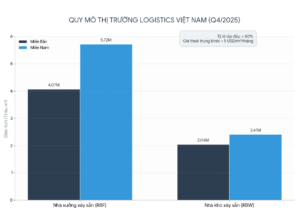
Vietnam’s real estate M&A market showed clear recovery in 2025, reaching approximately $2.5 billion in transaction value, according to JLL Vietnam. Investors increasingly prioritize projects with clear legal status, approved planning, and defined development timelines. Domestic investors remain active in mid-sized deals, while foreign investors focus on strategic assets such as integrated urban developments, high-end housing, and industrial real estate. Logistics properties have emerged as a key driver of M&A activity, supported by infrastructure expansion and the shift of industrial development toward satellite cities.
Demand for modern logistics facilities continues to grow, driven by e-commerce, distribution networks, and rising land costs in established industrial zones. With occupancy rates above 80% and stable rental prices, the sector remains attractive to international investors from countries such as South Korea, Singapore, Japan, and the United States. Experts at JLL expect M&A activity to accelerate around August–September 2026, supported by improved legal frameworks, strong FDI inflows, and continued infrastructure development across Vietnam.
Source: cafebiz.vn
5. Investment capital flows strongly into the Southeast Asian real estate market.
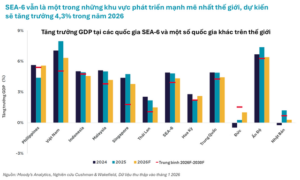
Southeast Asia’s real estate investment market rebounded strongly in 2025 despite global economic uncertainties. According to Cushman & Wakefield, total investment transactions in the region rose 16% year-on-year to reach USD 21.8 billion. Capital increasingly shifted toward industrial assets and digital infrastructure, particularly logistics facilities and data centers, driven by supply chain restructuring and the rapid growth of artificial intelligence. Singapore remained the region’s largest investment market, accounting for about 61% of total transactions, while industrial real estate investment across other Southeast Asian countries reached USD 1.3 billion, up 48%.
Strong long-term fundamentals continue to attract investors to Southeast Asia. Economies such as Malaysia, Thailand, and Vietnam benefit from expanding manufacturing ecosystems and trade corridors, while domestic consumption supports growth in Indonesia and the Philippines. Data centers became the largest investment asset class in 2025, reflecting rising demand for digital infrastructure. Vietnam, in particular, recorded the fastest GDP growth among the SEA-6 and is emerging as a key beneficiary of supply chain diversification, with strong potential in industrial real estate, retail, and data center development.
Source: tinnhanhchungkhoan.vn
-
-
As always, CVR is at your service and happy to provide help anyways we can!
Contact Us today to find the real estate investment in Da Nang that is right for You.
-